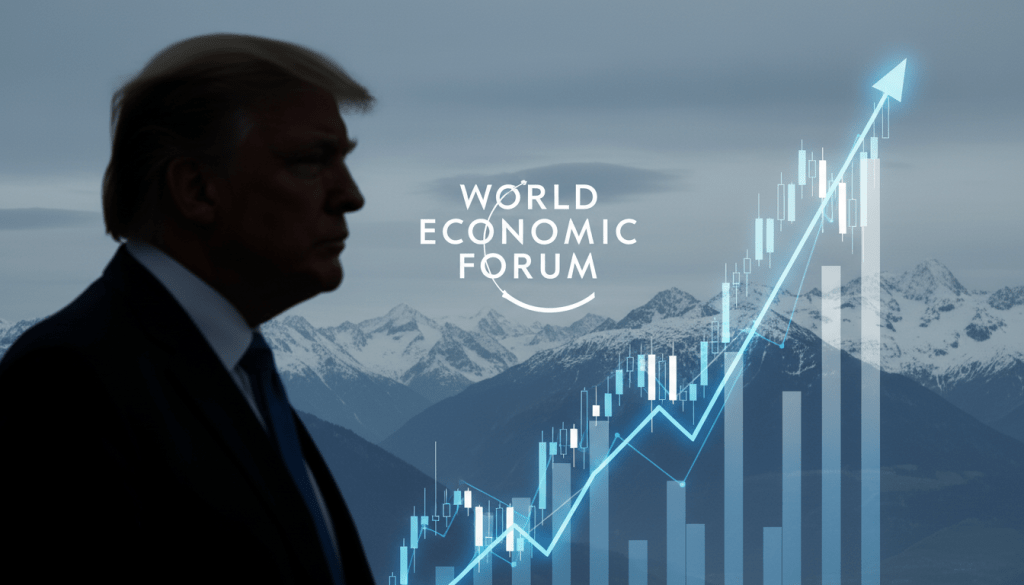
This week reminded markets how quickly confidence can shift when politics, policy, and perception collide. President Trump’s appearance at the World Economic Forum in Davos triggered a familiar pattern: caution, relief, and then renewed uncertainty. Headlines around Greenland and tariffs briefly lifted markets—only to reinforce how sensitive prices remain to political signals rather than fundamentals.
Beneath the surface, investors are navigating a market that’s learning to function with constant noise. Stocks held up, but defensive assets stayed firm. Oil moved on diplomacy, not demand. Interest rates remained stubbornly high. The message was subtle but consistent: momentum and uncertainty are coexisting—and likely will for some time.
That tension raises a practical question many investors are asking in 2026: How do you make financial decisions when headlines keep changing faster than the facts?
This is the question Carlos García, founder and CEO of Finhabits, addressed in a live stream this week—breaking down what Davos, markets, inflation, and rates actually mean for everyday money decisions. Read coverage of the Livestream here.
Another reminder that financial resilience isn’t about picking winners—it’s about staying steady when the narrative keeps changing.
Trump at Davos: relief without resolution
President Trump’s remarks at Davos briefly eased market anxiety, particularly after tariff-related threats tied to Greenland were softened or withdrawn. Stocks responded with a short-lived rally, signaling relief that tensions might not escalate immediately.
However, markets quickly returned to a cautious stance. Investors interpreted the episode as another reminder that policy direction can shift rapidly, keeping uncertainty embedded in prices even when markets avoid a sharp sell-off.
Why it matters:
Markets thrive on predictability. When clarity comes in short bursts and reverses quickly, investors demand a higher “risk premium,” which can limit upside and increase volatility even in relatively calm weeks.
What it means for your money:
This is not a week that rewards reacting to headlines. Making large portfolio changes based on political announcements often leads to whiplash. A diversified, rules-based strategy remains more reliable than trying to trade the news.
Interest rates: pressure is loud, policy remains patient
Despite growing political pressure to lower rates, central banks used Davos to reinforce a disciplined stance. Inflation has cooled significantly from its peak, but it remains above target, giving policymakers little incentive to rush into cuts.
Markets have adjusted to that reality. Mortgage rates remain elevated, credit card and auto loan rates are still high, and expectations for quick relief in 2026 have faded. This has created a “pause economy,” where households delay big decisions while waiting for cheaper borrowing costs.
Why it matters:
Interest rates affect nearly every part of daily life—from housing affordability to debt payments and business investment. When rates stay high, economic activity slows not because demand disappears, but because flexibility shrinks.
What it means for your money:
If you’re waiting for lower rates before acting, consider planning for a longer wait. Focus on paying down variable-rate debt, strengthening your emergency fund, and making decisions that work even if rates stay elevated longer than expected.
Oil prices ease as diplomacy lowers the risk premium
Oil prices moved lower this week as expectations shifted toward greater stability and supply coordination. The change wasn’t driven by collapsing demand, but by a reduction in geopolitical fear that had previously pushed prices higher.
Energy markets are especially sensitive to perception. When the risk of disruption fades, prices can fall quickly—even if underlying conditions haven’t changed much.
Why it matters:
Energy costs ripple through the entire economy. Lower oil prices can ease pressure on transportation, food distribution, and utilities, offering some relief to household budgets.
What it means for your money:
If you notice lower gas prices, treat it as temporary breathing room. Using that savings to build cash reserves or pay down debt is far more effective than assuming the relief will last.
Other stories that shaped the headlines
U.S. consumer sentiment improved modestly
U.S. consumer sentiment rose in January 2026 after a decline in late-2025, suggesting households are cautiously reassessing their outlook amid still-high prices. The improvement was modest but broad-based across income levels and age groups.
What it means for your money: Slight sentiment upticks don’t guarantee spending surges, but they can lift confidence in discretionary decisions. In this environment, weigh big purchases against your budget cushion rather than short-term optimism.
Oil prices reacted to geopolitical headlines
Oil markets swung this week as geopolitical narratives shifted. Prices slid after tensions eased around Greenland/Iran concerns, but also rebounded when new geopolitical threats resurfaced, underscoring that energy markets are still dominated by risk premiums.
What it means for your money: Energy volatility can affect transportation and goods costs quickly. Cheaper gas temporarily helps budgets, but unpredictable swings mean you shouldn’t plan long-term spending around energy prices alone.
Wall Street showed mixed performance with tech weakness and gold strength
U.S. stocks ended mixed on January 23, with key tech names like Intel dropping sharply on disappointing forecasts, while gold approached record highs as investors sought safe havens amid uncertainty.
What it means for your money: When growth stocks wobble and defensive assets like gold rise, it reflects investor caution. A diversified approach helps you stay balanced when specific sectors swing unexpectedly.
Credit card rate cap debate intensifies
Bank stocks weakened earlier in the week as markets digested uncertainty over a possible 10% cap on credit card interest rates and pushback from financial institutions warning about reduced credit availability.
What it means for your money: Regulatory debates don’t change your credit costs today, but they highlight why high-interest debt remains costly. Paying down high APR balances continues to be a priority for most households.
Davos economic commentary highlights AI and inequality risks
At Davos, global leaders — including IMF and ECB officials — highlighted structural challenges such as the impact of AI on labor markets and rising inequality, alongside calls for international cooperation.
What it means for your money: Macro themes like AI disruption influence long-term investment and career planning. Skills and sectors tied to productivity — not headlines — tend to deliver more reliable outcomes over decades.
Final thoughts
This week showed us that the economy is a balance of “engines” and “anchors.” The engine is still running—markets found moments of relief after Davos, and parts of the growth economy continue to hold up—but the anchors remain heavy. Political uncertainty keeps volatility close to the surface, and interest rates are still the biggest constraint on borrowing, housing, and confidence.
If you do one practical thing this weekend, make it this: review your monthly recurring bills—phone plan, internet, insurance, subscriptions—and cut or renegotiate just one. With the “cost of money” likely to stay elevated, lowering a fixed expense is one of the simplest ways to improve cash flow and give yourself a real “raise” right now.
Sources
-
- AP News – Trump Backs Down on Greenland
- Reuters – How the Central Banks have handled political pressure
- Oilprice .com – Oil Prices Flat as Iran Supply Risk Fades
- Reuters – US consumer sentiment improves in January
- The Wall Street Journal – Precious Metals Climb After Trump’s Tariff Threats Spur Haven Demand
- rading Economics – United States Initial Jobless ClaimsT
- MSN – Nvidia stock sinks as Wall Street declares the AI honeymoon officially over