To save on Halloween, decide how much you can spend before you shop, use what you already have at home, and compare candy by the cost per piece.
And if you pay with a credit card, use money you’ve already set aside.
Candy to hand out, a costume for school, a pumpkin, a family outing… the list can grow fast. You can still celebrate. The goal is to keep November from starting with a bill that throws off your monthly budget.
Why Does Halloween Cost More This Year?
Candy prices have gone up. According to the Bureau of Labor Statistics (BLS), the agency that measures inflation in the U.S., candy and chewing gum cost 7.7% more in September 2026 than in September 2025.
Carlos García, CEO of Finhabits, explained it on Noticias Telemundo: rising cocoa costs, transportation costs, and inflation are pushing up the price of candy, chocolate, and costumes. His advice: celebrate, but keep an eye on your credit card balance.
And you’re not the only one doing the math.
In its 2026 Halloween survey, the National Retail Federation (NRF), the U.S. retail trade association, estimates that people plan to spend $13.5 billion this year, about $115 per person. If prices are higher than expected, 34% plan to look for items they can reuse in future years or on other occasions.
For the bigger picture, here’s how to protect your money from inflation.
How Much Can You Spend on Halloween?
Whatever is left after covering the essentials: rent, food, transportation, utilities, debt payments, and, if it applies to you, money you send to family.
For example: you have $350 and still need $250 for expenses before your next payday. That leaves $100.
If you set aside $40 just in case, your Halloween limit is $60. That’s a limit, not a spending goal: if you spend less, even better.
Here’s one way to divide that $60:
| Category | Limit |
|---|---|
| Candy | $20 |
| Costume and accessories | $20 |
| Outings and transportation | $10 |
| Decorations | $5 |
| Taxes and unexpected expenses | $5 |
| Total | $60 |
Is the costume the biggest priority in your household? Reuse last year’s decorations and move that $5 to the costume budget. The total stays at $60.
Two quick rules:
- If your income changes from week to week, plan around the money you already have, not an extra shift that hasn’t been confirmed yet.
- Your credit limit is not your budget.
Do you also celebrate Día de Muertos? It’s just two days later.
Include it in the same spending limit so it doesn’t turn into a second surprise expense. And if you want to get the whole month in order, start by organizing your expenses.
How to Save on Candy and Costumes
Candy: Compare the Cost per Piece
The bigger bag isn’t always the cheaper choice for you. Divide the price by the number of pieces:
- A bag of 60 pieces for $12: $12 divided by 60 is 20 cents per piece.
- A bag of 100 pieces for $17: $17 divided by 100 is 17 cents per piece.
The bigger bag costs less per piece, but if you only need 60, the smaller bag saves you $5.
How can you tell how much candy you need?
If you expect about 30 kids and give each one 2 pieces, that’s 60 pieces. And if the packages come in different sizes, compare the price per ounce.
Costumes: Start With What You Already Have
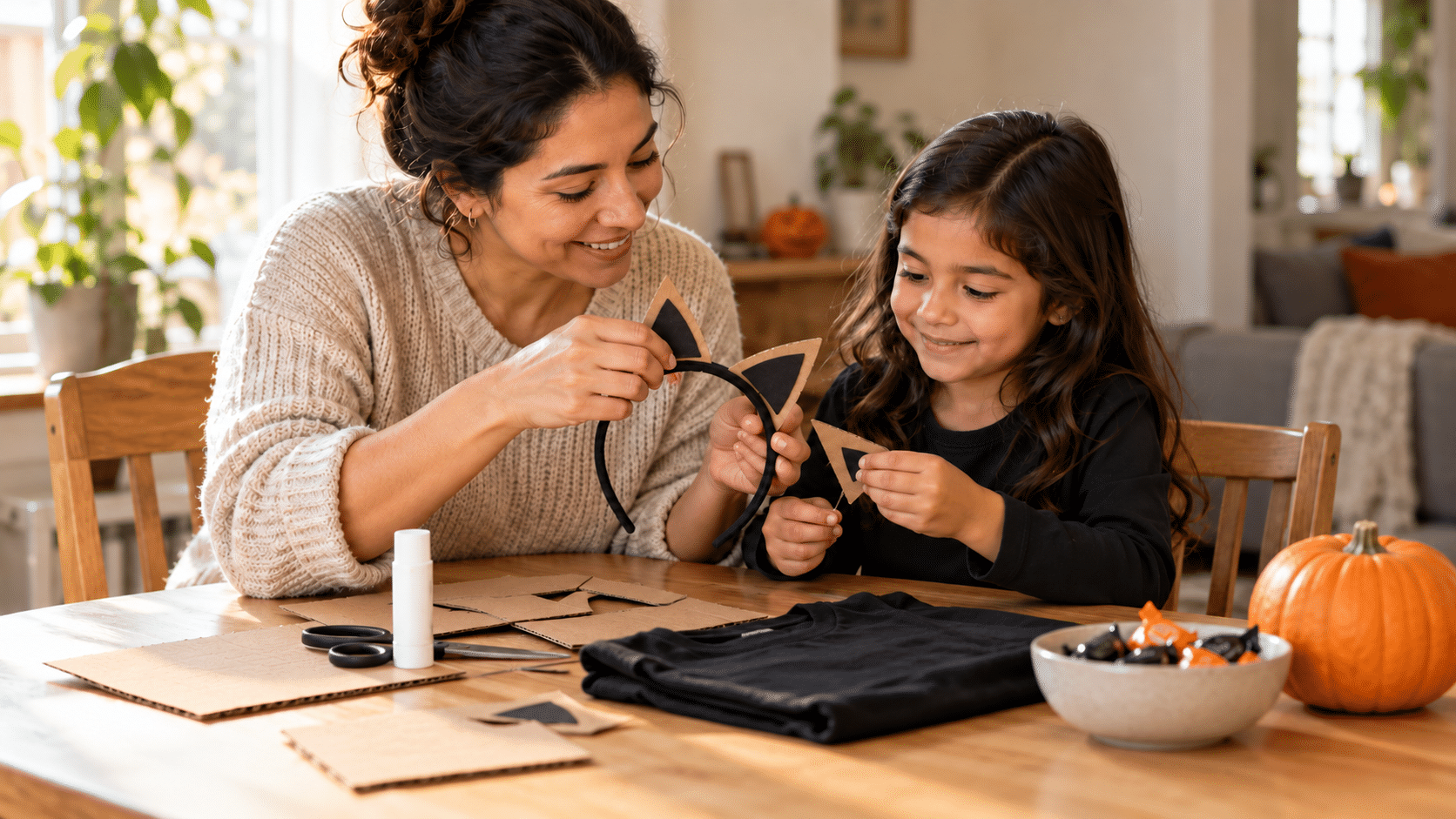
Before you buy anything, check the closet. A plaid shirt, jeans, and a borrowed hat can make a cowboy costume. Clothes in a single color and a pair of cardboard ears can become an animal costume. Buy only what’s missing.
You can also swap costumes with cousins, neighbors, or classmates: a costume your child has outgrown may fit another child.
And if you buy a ready-made costume, check what’s included. The price often doesn’t cover shoes, makeup, or accessories.
Watch the extras: five $4 accessories add up to $20, the entire costume budget in this example. Like other small purchases, they may seem minor on their own but can add up quickly.
If You Pay With a Credit Card, Use Money You Already Have
Using a credit card isn’t the problem. Ending up with debt you can’t pay off is.
Set aside the money for your Halloween purchases now, and pay your balance in full by the due date.
According to the Consumer Financial Protection Bureau (CFPB), the federal agency that protects consumers, most credit cards have a grace period: if you pay in full and on time, you generally won’t pay interest on your purchases.
But if you’re carrying a balance from previous months, that grace period may no longer apply, and new purchases can start accruing interest from the day you make them.
In that case, pay with cash or a debit card instead, and take a look at how to build a plan to pay off your debt.
Before you shop, write down your spending limit and share it with whoever is going with you. That way, nobody gets a surprise at checkout.
And for next year: if you set aside $10 a month from January through October, you’ll have $100 ready for Halloween.
Frequently Asked Questions
How Much Do People Spend on Halloween on Average?
According to the National Retail Federation’s 2026 survey, people celebrating in the U.S. plan to spend an average of $115.14 on candy, costumes, decorations, and greeting cards.
But that average isn’t a spending goal: what you can spend is what’s left after covering rent, food, debt payments, and your other commitments for the month.
How Can I Celebrate Halloween on a Budget?
Put costumes together with clothes you already have, or swap them with family and neighbors. Reuse last year’s decorations and buy only the candy you plan to hand out, comparing the cost per piece.
Many schools, libraries, and community centers host free events; just check whether you’ll need to pay for transportation or food.
What If I’ve Already Spent More Than I Planned?
First, stop making purchases you don’t need. If you bought something you haven’t used, check whether the store accepts returns. Then adjust other optional expenses for the month, never your rent or required payments.
And if you used a credit card, try to pay the balance in full by the due date to avoid interest.